


Over the past year, I worked to obtain a Program Management Professional (PgMP) certification from the Project Management Institute (PMI). With no prior experience with PMI’s materials and few professional peers holding any of their certifications, it was a leap into many unknowns. Some of my initial questions definitely were:
How much time would it take?
Could I fail the test?!?
How much could this cost me?
While important questions to be sure (and I’ll be answering them over the course of this series), my journey didn’t really begin there. For those who’ve independently sought out more professional education at mid-career, it’s the “why” that matters the most. It’s the reason you're going to sit through all those long hours of studying, so it has got to be a good one.
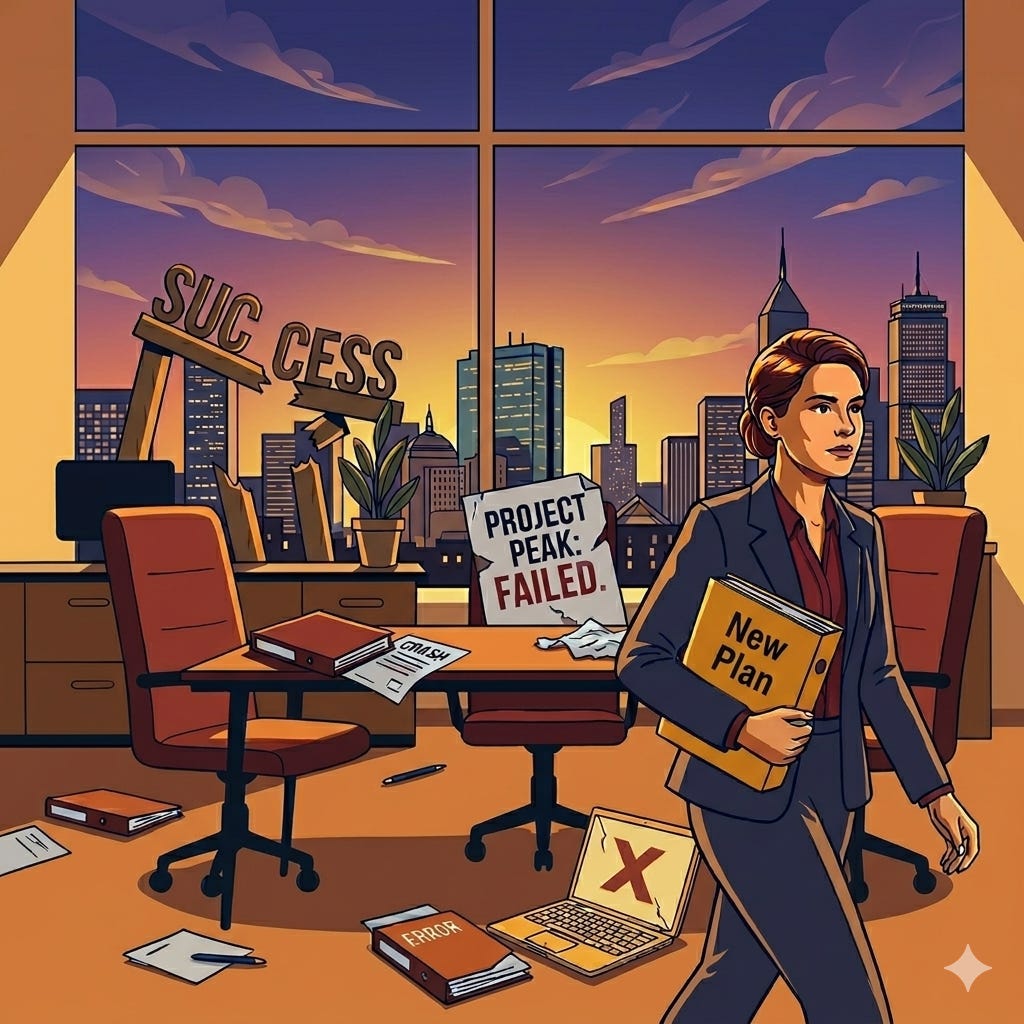
For myself, I pursued the PgMP certification because of an annoyingly stubborn determination not to repeat past failures and truly find a better way to manage programs.
About the “Project PgMP Certification” Series
In this series, I share my journey toward PgMP certification, including my experiences with the application, educational materials, and exam. If you are considering the PgMP certification or are curious about the process of pursuing more education at mid-career, this series is for you. This post, Part 1, begins with my reasons for choosing program management education after numerous years working in the healthcare industry at both the program manager and program director levels.
1. Backstory
One year ago, I was running a burgeoning program focused on women’s equity and was a healthy several years out from my last, ultimately doomed job: eight years running a program that improved healthcare operations at an academic medical center.
Well, the shadows of failed programs run long and are not easily forgotten. My prior healthcare program had five productive years, got knocked around by a company reorganization, and lasted another three years in a tailspin. I held on tight, trying to “right the plane,” but the problems stacked up. At the end of my eighth year, I quit, leaving behind my niche healthcare expertise, professional community, and a nicely accumulating pension. But I was miserable and clearly needed a fresh start.
Now I had another emerging program on my hands and – this is significant – one where I had real autonomy to lead. I was also ambitious about developing my thought leadership in program management, beginning with writing this Substack. That “itch” for finding a better way to manage programs was very real, but exactly how remained a mystery.
2. Why was more education my best next step?
When you hit a wall in your career, the typical way to move forward is by asking your peers, mentors, and role models for advice. As I faced down this question of “how to manage programs more effectively,” that road was not going to cut it. In unpacking the causes of my prior program’s failure, I reached a pretty severe conclusion: while my community knew a lot, no one knew enough.
When my last program got into trouble, I listened to my superiors, implemented well, and succeeded on the new projects, but still couldn’t get the program back on a solid footing. With more organizational change afoot, I completely lost trust in my leadership’s guidance. Looking back, we all clearly didn’t know how to manage a long-term program with such an extremely challenging aim. We universally lacked the skill set, and I believe the root cause sat in the ad hoc way that we all learned program management in the first place.
For a little background about the non-profit industry, many people enter project and program management careers with little to no formal training in those specific disciplines. Subject matter expertise is highly prized in the hiring process, and the skills to lead initiatives are primarily learned on the job, either from a good manager or through trial and error.
My career trajectory was much the same: graduate education in public health, followed by field experience in project and then program management. Along the way, I gained some formal training in project management through workplace seminars, but nothing directly in program management. Frankly, I didn’t know such a thing existed.
My teachers were my managers, most of whom were doctors and nurses who’d transitioned at mid-career over to administration. While I learned a great many things from them that I remain appreciative of to this day, I now recognize that we all had pretty sizable gaps. So while I had professionally grown up in my industry, working at the highest levels, I had inherited an incomplete skill set.
To progress, I needed to deviate from the norms in my industry and find a better education. That meant setting aside my ego around my fancy college degrees and years of work experience at a world-renowned hospital. Instead, I committed to becoming a student again and formally studying the discipline of program management—an atypical path for anyone in the Boston healthcare scene.
3. Finding PMI and the PgMP certification
Now I had a clear goal to seek out formal education. At this point, I would like to say that I conducted a thorough audit of all available program management training options, assessing the pros and cons to find the perfect fit. But I’ll be honest: I just randomly explored the Internet.
In my wanderings, I came across PMI fairly quickly. I had heard of the organization before, but I only knew it administered the Project Management Professional (PMP) certification. Certainly, no details on the quality of their content and few in my immediate professional circles held the PMP.
Then, in reading through PMI’s website, I was surprised to see that they offered a certification specific to program management. At an initial glance, it looked like a potential fit. Probably no spoilers here, but in a deeper review, it turned out to be a strong match. Why? We’ll cover that assessment in the next segment of the “Project PgMP Certification” series. Look for my next post in two weeks.
“On My Mind”
For those new to “The Non-Profit Program,” I always include a song pairing with my articles. This week’s song is “On My Mind” by Alex Warren and Rosé. It’s been an earworm on my playlist for the past couple of weeks—a good jam with great musical momentum.
And from experience, if you are a prospective PgMP candidate, it’s momentum you’ll need to get through learning “The Standard for Program Management (1),” so I’m giving you this song early for inspiration.
References
Project Management Institute PMI. The Standard for Program Management - Fifth Edition. Project Management Institute; 2024.
Disclosures: In writing this series, I am not employed or compensated by PMI in any way. My affiliation with the PMI is solely as a member and PgMP certificate holder. The experiences included here are my own.
While I strive to include accurate details on the PgMP certification, please look to PMI’s website as the final authority on the requirements and process. Particularly if you are reading this series well past its publication date, please check for updates on the application, educational materials, and exam process.